
See the raid before it sees you.
A read-only ESP overlay for ARC Raiders on Linux. It reads memory. It never writes any. No injection, no hooks, no aimbot.
Linux only. There is no Windows build and there never will be.
- Players, squads, health, weapons and what they're holding
- Every ARC on the map, by type
- Loot colored by in-game rarity
- Live overlay on the in-game map
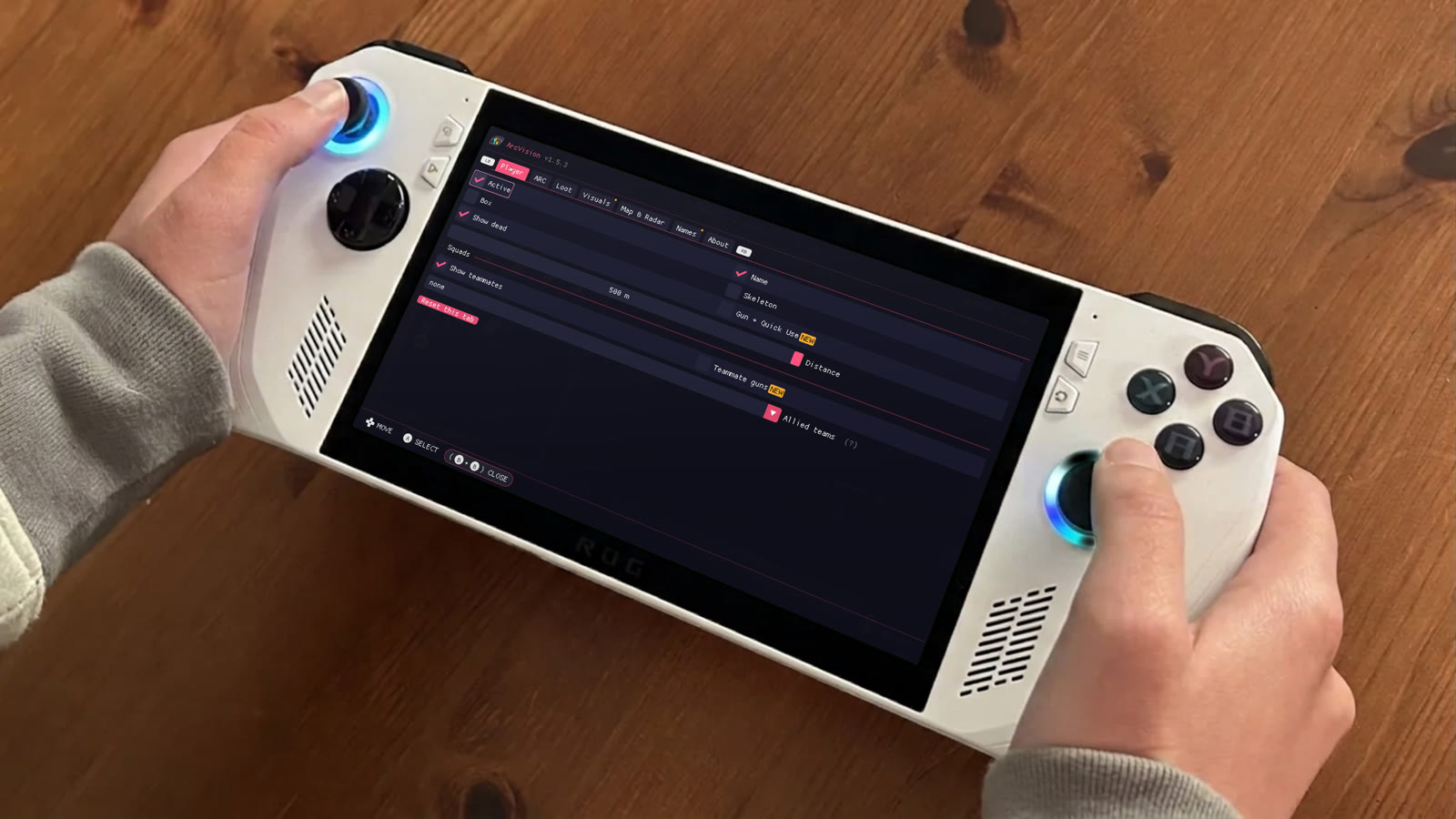
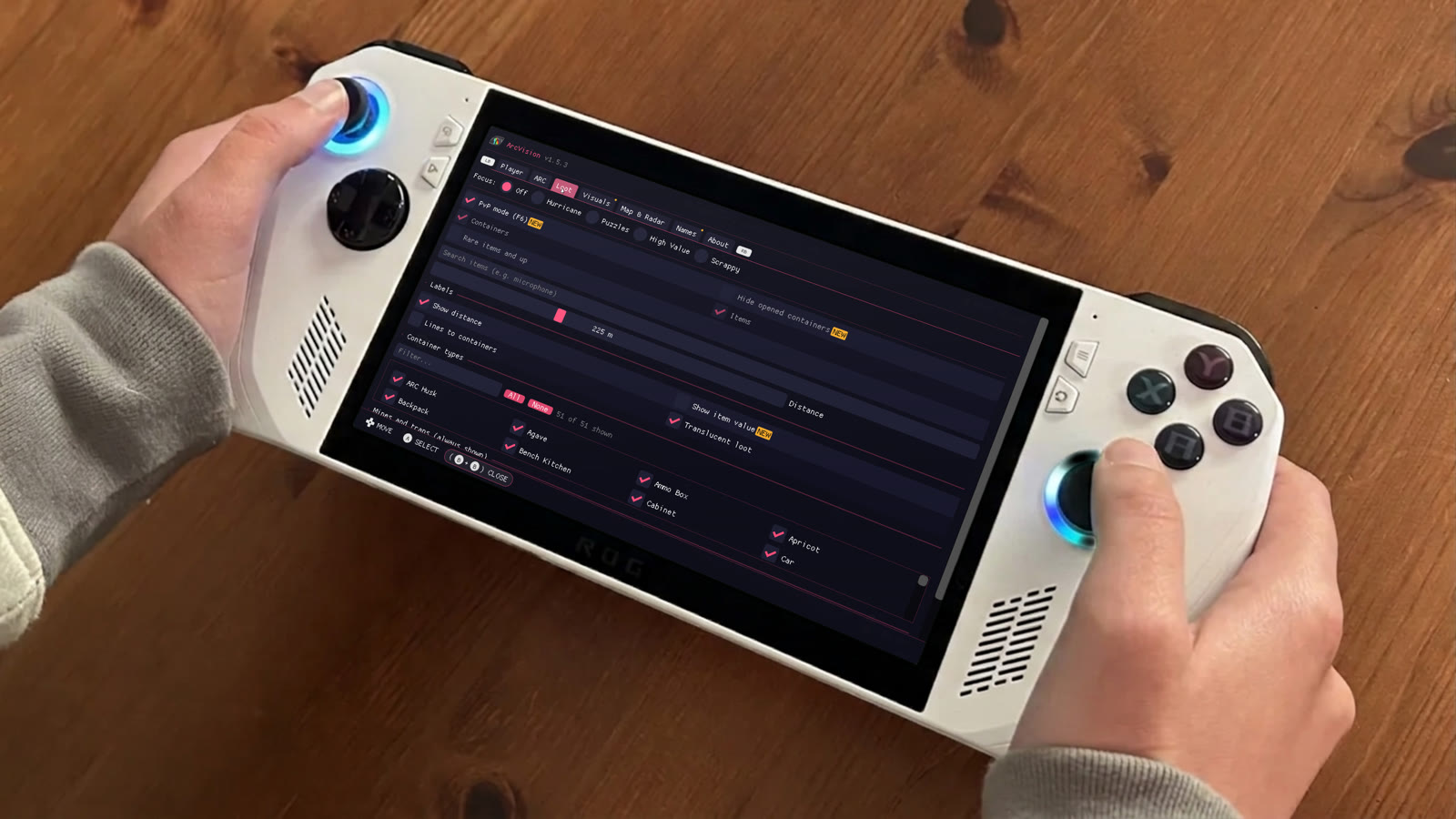
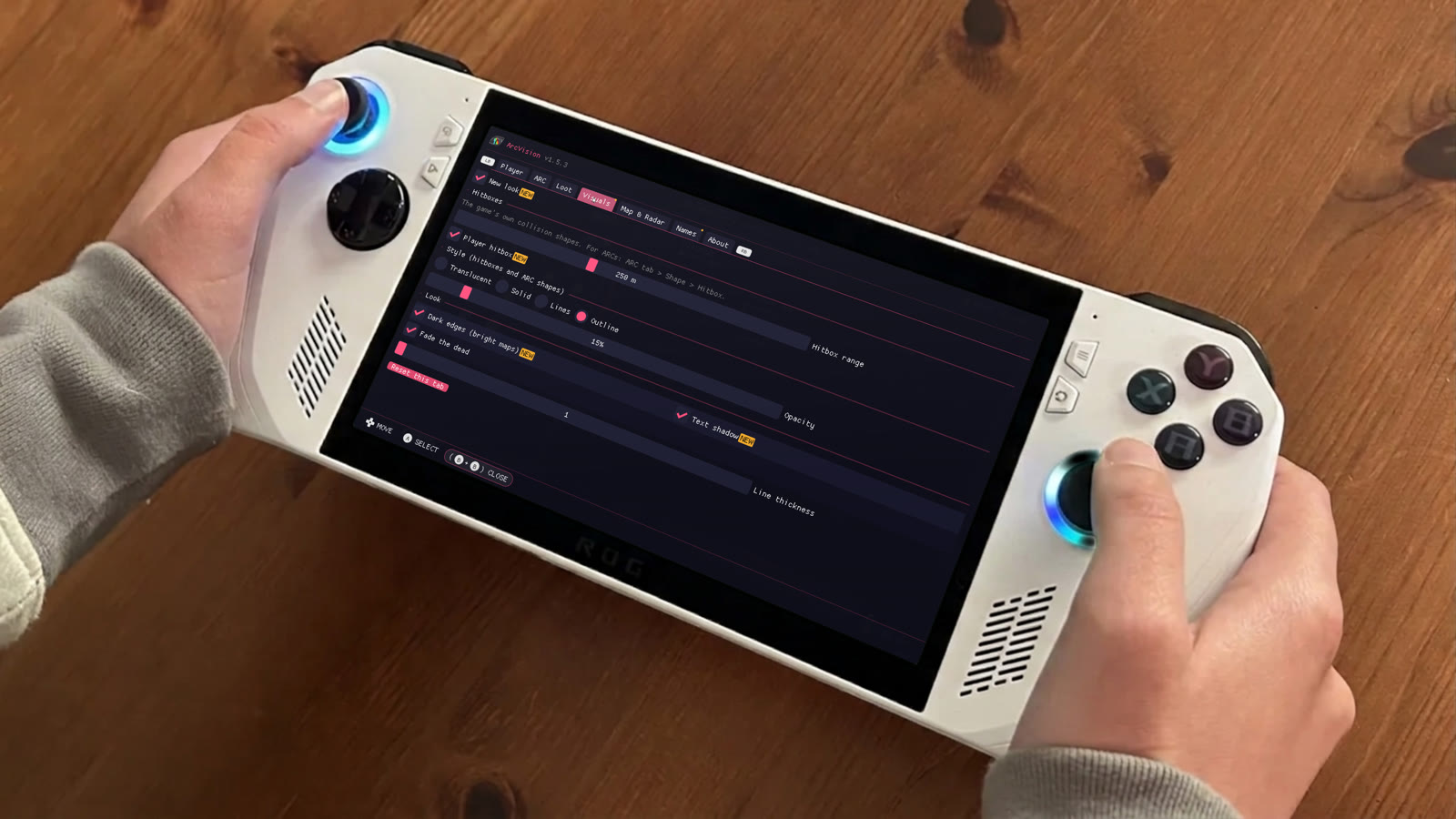
- Handhelds and controllers, full-screen settings
- Starts with the game, updates install themselves
See the raid
Players
Boxes, skeletons, names, health and shields. Squads are numbered and color-coded, so teams are easy to identify at a glance.
Weapons and gear in hand
You also see the weapon each raider is carrying, colored to its in-game rarity and level, and when they pull out a grenade, mine, bandage or shield recharger, you see that too.
ARC, mines and barricades
Every ARC in the zone, labeled by type, live or destroyed. Placed mines and traps show as hazard warnings, and barricades in blue.
Loot
Containers and ground pickups colored by in-game rarity, with a search filter and focus modes for caches and puzzle relays.
Radar
A compact top-down view that stays up while you are in menus.
The real map
Open your map and every player is drawn onto it in their true world position, with names and weapons.
On a handheld
On a Steam Deck, ROG Ally or Legion Go, settings open full screen with big buttons and button prompts like the game's. Press Start + Select to open them, then use the D-pad, or just tap the screen. ArcVision starts by itself with the game.
Built for the events
Two purpose-built modes for the moments where finding the right thing first decides the whole run.
Hurricane caches
One toggle switches the overlay to first-wave Raider Caches only, out to about 250 m (as far as the game sends them), with ground clutter hidden.
No hunting through loot spam while the storm closes in. The caches light up across the map and you go straight to them.
Puzzle rooms
One toggle shows the puzzle door switches and relays, out to 600 m, with everything else hidden.
The switches are the hard part of a puzzle room. See where all of them are from the doorway and the room stops being a search.
ESP only
No aimbot. No triggerbot. No recoil control. No injection. No memory writes. No network manipulation. No unlocks or spoofing.
This is a design decision, not a roadmap. The overlay runs as a separate process and reads the game's memory. Nothing is loaded into the game, and nothing about it is changed. This design avoids the signals anti-cheat most commonly looks for: no injected code, no hooks, no memory writes.
Before you ask for access
Linux only
A Wayland session on KDE Plasma, COSMIC, sway or Hyprland, with Steam or Heroic
(for the Epic Games version) installed as a Flatpak. No Windows build, ever. X11 is not supported (it would be visible to
the game), and GNOME will not work until its compositor adds wlr-layer-shell.
Runs on SteamOS handhelds in Desktop Mode (tested on a ROG Ally).
Details in the FAQ.
It is in beta
Game patches break it, and it is fixed after the fact, not before. Expect roughly a day of downtime following a patch while things are put back together.
There is real risk
Bans are unlikely, but not impossible. ArcVision runs completely outside the game: the game runs inside Steam's or Heroic's Flatpak sandbox, so it can't see ArcVision's process or window, and ArcVision never writes to the game. No bans so far across our users. That's not bulletproof, though: a future anti-cheat update could change it.
Embark's own policy (Sept 2026): every cheat ban is permanent, a banned copy of the game can't be used on another account, and they ban hardware too. A throwaway account doesn't protect a main account on the same PC or the same copy of the game.